


The choice of materials in packaging influences the performance of packaging machines, brand image, sustainability, and the costs of the final product. From a technical standpoint, the material protects the product and must be machinable, recyclable, and compliant with regulations. In addition, it determines aesthetics, shape, ergonomics, and print quality, becoming a true marketing tool: it communicates with the consumer, enhances the product, tells its story, its ingredients, and the brand’s environmental commitment.
In food packaging, the material is crucial because it defines the protective barrier and the shelf life of products, depending on whether it is paper, plastic, laminated structures, aluminum, or other materials. Furthermore, materials and inks in contact with food must comply with MOCA requirements, without overlooking the importance of machinability.
In non-food packaging, the material plays a similar technical role but with different priorities: mechanical strength and protection during transport are key. In all cases, paper and plastic must be designed as functional systems, engineered to work in synergy with both the product and the packaging machine.
Packaging sustainability and environmental impact
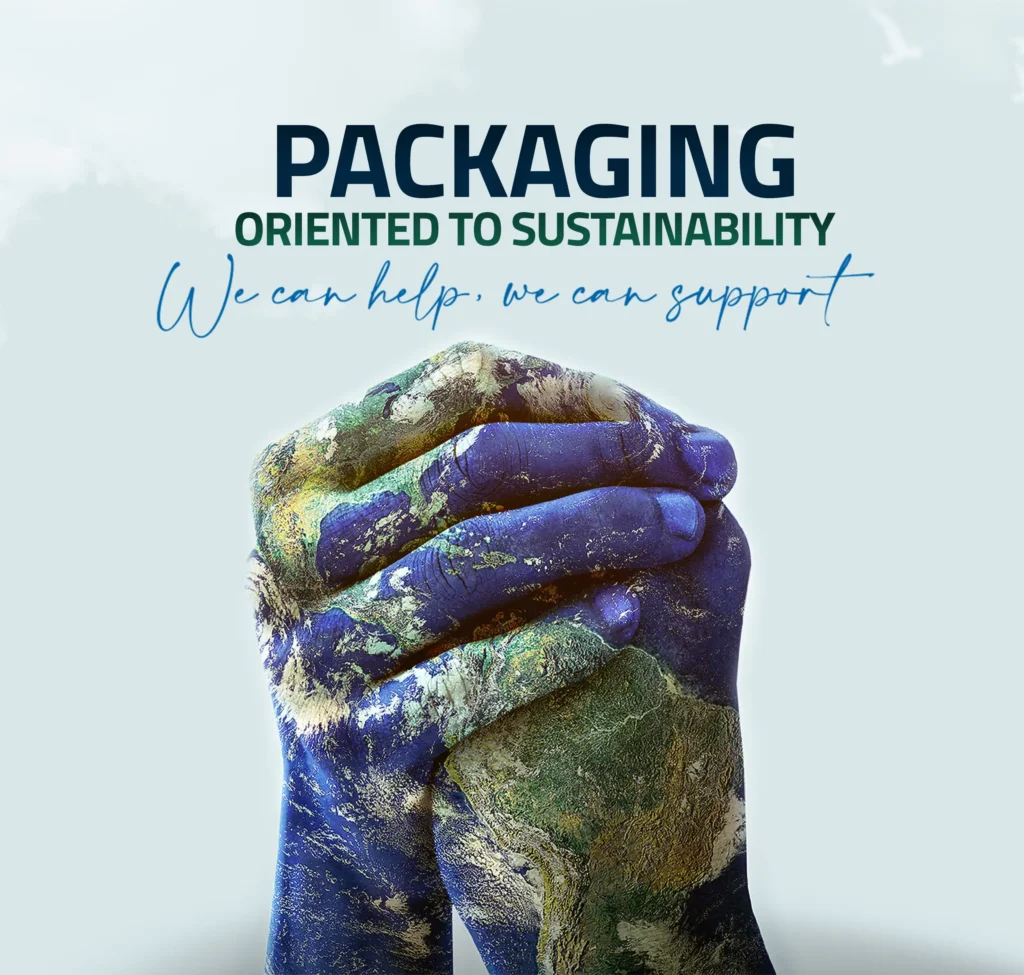
“When talking about packaging sustainability, it is necessary to consider the entire life cycle of the material, from the origin of the raw material—renewable or fossil-based—to the quantity used, recyclability or reusability, the presence of recycled content, the energy required for production and transport, and CO₂ emissions. Packaging is truly sustainable if it protects the product, reduces waste and environmental impacts, without compromising safety and functionality. Real recyclability is extremely important, which is why it is preferable to choose mono-material systems rather than laminated structures that are difficult to separate, certified or recycled raw materials, and weight reduction while maintaining performance. Paper, although perceived as more ‘natural’ than plastic, is sustainable only if it comes from responsible supply chains. Plastic can be optimized through recycled content and structures designed to facilitate collection and recycling. Completing the picture is communication with consumers, using clear indications for waste sorting and transparent messages about what makes that packaging sustainable,” explains Marco Tanzi of Cama.
Marketing-oriented packaging: structure, barrier properties, and material sustainability
“Packaging is a design tool oriented toward marketing: it is the first point of contact between the consumer and the product, what is seen and touched even before the contents. The choice of packaging material directly influences ergonomics and ease of use. Opening, reclosure, dispensing, grip, zip closures, transparent windows, handles, and reinforcements largely depend on the substrate used and its folding, die-cutting, and sealing capabilities.
In marketing-oriented packaging, the material is linked to consumer needs: product safety, waste reduction, shelf life, sustainability, and user experience. Barrier performance and shelf life derive from the structure and any laminations. Packaging machinability efficiency is linked to optimized materials. Sustainability stems from mono-material solutions, recyclability, and recycled content,” explains Nadia Comi. All these elements define a truly integrated packaging system, where product, material, machine, and logistics are designed together to achieve high performance and consistency across the entire supply chain.
Recycled paper and plastic in packaging: market trends and the role of machines

The packaging market is undergoing a strong transition toward more sustainable materials. This evolution is driven by consumer expectations and European regulations, particularly the PPWR, the regulation governing packaging and packaging waste. “Companies that package products are asking how material use will change on existing lines and whether packaging machines will be able to maintain the same performance with different substrates. More and more companies are replacing traditional materials with recycled paper and cardboard, in search of sustainable packaging materials.
The same trend applies to plastics, where ‘virgin’ material is gradually being replaced by solutions with increasing percentages of recycled content. In this context, Cama designs packaging machines capable of handling different types of materials, supporting customers in using recycled packaging on existing lines. The company often works together with carton manufacturers to build a correct product–packaging system that meets market needs and aligns with sustainability goals. Packaging offerings increasingly include two alternatives: a virgin paper or board version designed to achieve a specific aesthetic result, and a recycled-material version with the same functional performance, enabling environmental savings. If virgin material used to be the standard solution, today priority has shifted to recycled materials,” as Tanzi points out, “marking a true paradigm shift in the packaging world.”
Limits of paper and plastic recycling in packaging: what you need to know
In sustainable packaging, the recycling of paper and plastic has technical limits that cannot be ignored. Paper can only be recycled a finite number of times, as fibers shorten, weaken, and lose strength. Plastic also degrades its properties through repeated processing. To maintain packaging quality, it is often necessary to integrate a share of virgin material. Packaging design must therefore strike a balance between sustainability, line performance, and the intrinsic constraints of recycled materials.
“In paper recycling, cellulose fibers degrade with each cycle: they shorten, lose strength, and make recycled paper progressively less performant. On average, a fiber can be recycled up to about seven times before it becomes too damaged for further packaging use. To maintain quality and performance, especially in packaging, it is necessary to continuously add a share of virgin raw material to compensate for the loss of mechanical properties.
For plastics, recycling limits depend on the wide variety of polymers and their molecular degradation during processing. Heating shortens polymer chains and reduces their properties, meaning many plastics can only be recycled a few times. PET bottles are an exception, although some material is still lost during recycling. In general, mixing different plastics, multilayer structures, and contamination with residues make recycling very difficult: in such cases, part of the waste ends up in landfill, limiting the ability to truly close the packaging loop,” continues Nadia Comi.
In this context, packaging designers must reconcile quality, safety, and performance with the technical limits of paper and plastic recycling, recognizing that virgin material remains essential to ensure reliable, functional packaging.
How packaging is changing for global markets: recycled content, e-commerce, and logistics
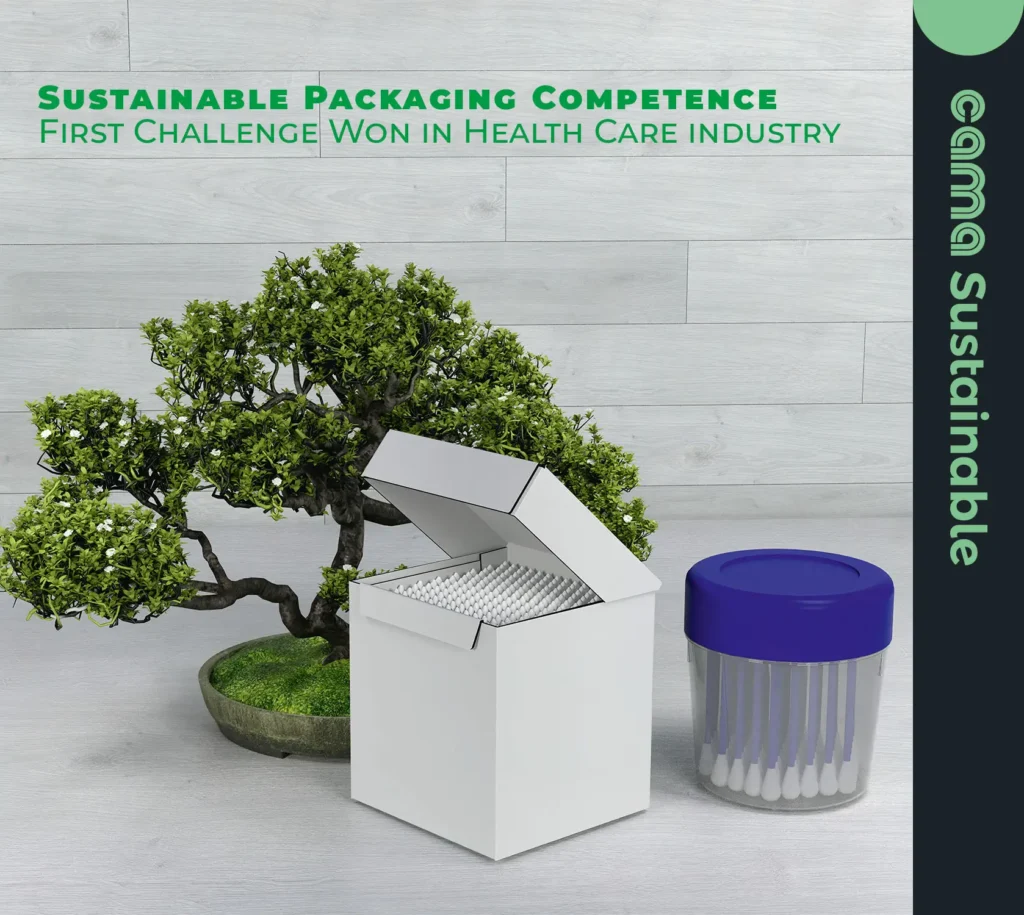
International packaging trends are converging toward a common goal: combining sustainable packaging, technical performance, and consumer expectations. “More and more markets, including Asian and South American countries, are demanding packaging with recycled content and lower-impact materials, such as recycled paper and board, bioplastics, and biomaterials. One of the main directions is the shift from complex structures to mono-material packaging in paper, board, or recyclable plastic—often as part of a ‘paperization’ process replacing plastic packaging—thanks to new coatings and barrier films that still provide adequate product protection,” continues Tanzi.
“At the same time, packaging is being optimized for e-commerce and global logistics. Lighter, more compact packages are designed to withstand stress while reducing volume, cushioning, and waste, and to be fully compatible with automatic machines, palletizing systems, and automated warehouses. From a design and marketing perspective, packaging is a strategic communication medium: graphics, sustainability, material origin, customization, and smart packaging solutions guide consumers and tell the product story. For industry, this translates into an integrated approach to packaging, where material, carton design, packaging line, and brand promise are designed together to compete globally.”
Designing packaging for transport: testing and strength for logistics

Designing packaging for goods transport means finding the right balance between mechanical strength, logistics efficiency, and shelf appeal. “Well-designed packaging protects the product throughout its journey: it absorbs shocks and vibrations, withstands compression and climate variations, maintains stability on pallets and inside containers, reducing the risk of damage and returns. In the case of corrugated board, for example, the combination of paper quality and flute type determines final strength, so structure and material cannot be chosen ‘at a glance.’
The solution comes from an integrated approach to transport packaging, involving machine manufacturers, carton producers, and customers. Product characteristics, the role of the packaging (transport, display, marketing), logistics routes, and strength requirements are analyzed to obtain packages that perform well in transit and remain consistent with brand image on the shelf,” emphasizes Tanzi.
“To verify that packaging truly withstands pallet transport, specific tests are used. Compression tests define stacking height. Vibration tests simulate continuous movement on trucks, trains, or ships. Transport tests combine compression, vibration, shocks, and, if necessary, temperature and humidity variations in a single cycle. Crash tests simulate drops or accidental impacts. These tests are crucial when using tall, automatically loaded pallets that increase load on lower layers. Test results allow comparison of materials, thicknesses, and structures, optimization of reinforcements and accessories (corner protectors, stretch film), and the introduction of lighter, more sustainable packaging without increasing damage risk. Investing in compression, vibration, transport, and crash tests reduces returns and complaints, improves pallet transport reliability, and enhances overall logistics efficiency.”
Packaging as a synergistic system: carton design, materials, and packaging lines
Collaboration between carton manufacturers and packaging machine builders is crucial to designing paper and board packaging that operates reliably on automated lines and throughout logistics. “Carton producers understand materials, flute types, die-cutting, and closure systems, while machine builders define speeds, tolerances, and mechanical limits. Only by integrating these skills can robust, efficient packaging aligned with marketing needs be achieved. In practice, good system-level packaging design allows boxes, cartons, and trays to be formed, filled, and closed automatically without jams. This reduces waste, line stoppages, and palletizing issues, ensuring products reach the point of sale intact,” underlines Nadia Comi.
“That is why companies like Cama increasingly work with carton producers and paper manufacturers, sharing early decisions on structure, flute type, dimensions, and transport conditions, also considering the varying conditions of international markets. When this collaboration is missing, the risk is choosing cheaper but less performant boards, leading to deformation, damage, returns, and added costs. Conversely, a coordinated project between machine, carton producer, and customer defines corrugated packaging tailored to real transport conditions and required standards, including those of multinational companies. The result for the end customer is reliable, sustainable packaging aligned with brand image across global markets.”
Storage of paper and board for packaging: practical rules for warehouses and pallets
Nadia Comi explains the importance of proper storage: “Correctly storing paper and board for packaging means maintaining controlled and stable environmental conditions. Humidity, temperature, and storage methods affect flatness, shape, and processability: if materials deform, printing and packaging machine issues arise. To prevent this, pallets should be kept covered, in dry environments, away from cold, humidity, direct sunlight, and heat sources, raised off the floor, spaced from walls and air currents, and protected until use with film, straps, and plywood sheets.
The way sheets, die-cuts, and cartons are stored is also critical: sheets laid flat, cartons stored vertically, no loose stacking, no compression in the wrong direction that could damage pre-breaks. Good inventory management, using a ‘first in, first out’ approach and pallet acclimatization in the production area, reduces degradation over time and improves machine performance. In food packaging, it is also important to avoid proximity to chemicals or odorous products. Following these rules ensures consistent performance, fewer rejects and line stoppages, and packaging that reaches the customer with the quality intended at the design stage.”
Material machinability in packaging: what it is and why it affects line performance

Material machinability in packaging is the ability of paper, board, or plastic to run stably and continuously on automatic machines: materials must feed correctly, maintain flatness, fold at designated crease points, and close without defects. “When materials are deformed, too light, irregular in thickness, or sensitive to humidity, jams, stops, rejects, and slowdowns increase, directly impacting line performance.
For this reason, preliminary testing with actual materials is always required: starting with plotter-cut samples to verify shape and closure, then samples suitable for mechanization to check gripping, forming, and closing on the machine. These stages allow corrections to closures, tabs, and creases before large-scale production, preventing widespread errors. Any material change—such as introducing recycled content or different boards for cost or recyclability reasons—requires testing and machine adjustment, because machinability arises from the balance between material, carton design, and line parameters,” explains Marco Tanzi.
“Cama machines are highly flexible and can be quickly configured to manage the machinability of a wide range of folding cartons and corrugated boards in the packaging process. Focusing on material machinability through targeted tests and continuous dialogue between customer, carton producer, and machine builder increases packaging speed, reduces waste and downtime, and ensures consistent packaging quality—turning material choice into a true competitive advantage.”
Adhesives for paper, board, and plastic packaging: technical data to evaluate before selection
When designing packaging, adhesives must also be considered as part of the system, contributing to package integrity. In food packaging, beyond technical performance, MOCA requirements apply. Adhesives must ensure low odor, low migration, and complete compliance documentation to guarantee safe, regulation-compliant packaging.
Key trends move in two directions: more sustainable adhesives with lower environmental impact, and formulations designed to facilitate paper and plastic recycling. In food, beverage, and cosmetics packaging, demand is growing for low-odor, low-migration adhesives that combine content safety with high-quality closures.
EU packaging regulations: primary, secondary, end-of-line, food and non-food
For all packaging (paper, board, plastic; primary, secondary, and tertiary), the historical reference is Directive 94/62/EC on packaging and packaging waste, which defines packaging levels and introduces essential requirements (weight/volume minimization, limitation of hazardous substances, recyclability, recovery, and recycling targets by material).
This directive is replaced by Regulation (EU) 2025/40 – PPWR (Packaging and Packaging Waste Regulation), adopted on 19 December 2024, entering into force on 11 February 2025 and generally applicable from 12 August 2026. As a regulation, it will be directly applicable in all Member States and will repeal Directive 94/62/EC from its application date.
The PPWR objectives for all packaging levels and materials are:
- making packaging recyclable in an economically sustainable way
- reducing packaging waste
- increasing recycled content in packaging
- reducing the use of virgin raw materials
In practice, for paper and plastic this means:
- every package (cartons, trays, bags, shrink films, transport boxes) must be designed for recycling, according to technical criteria to be defined by delegated acts by 2028
- all packaging levels (primary, secondary, tertiary) fall within scope, with requirements on prevention, recyclability, reuse, recycled content, and marking
Primary paper and plastic packaging in contact with food
In addition to the PPWR, MOCA rules apply to food-contact materials (including paper and plastic):
- Regulation (EC) 1935/2004 on materials and articles intended to come into contact with food (materials must not release substances that endanger health or alter food composition, odor, or taste)
- Regulation (EC) 2023/2006 on Good Manufacturing Practices (GMP) for MOCA, applicable also to producers of paper, board, and plastic for food packaging
Plastic for primary food packaging
For food-contact plastics, harmonized EU legislation applies:
- Regulation (EU) No. 10/2011 on plastic materials and articles intended to come into contact with food (authorized substances list, migration limits, declaration of compliance, and technical documentation).
This regulation is periodically updated, so checking the latest amendments is essential.
Paper and board for primary food packaging
For paper and board, the EU does not yet have a specific harmonized measure like for plastics. Regulations 1935/2004 and 2023/2006 apply, requiring material safety and GMP adoption. In the absence of an EU-specific measure, different national guidelines exist.
Secondary paper and plastic packaging
Secondary packaging (cartons, clusters, boxes containing multiple sales units) generally does not directly contact food but falls fully under Directive 94/62/EC / PPWR for waste, recycling, reduction, and labeling. It may indirectly fall under Regulation 1935/2004 if there is a risk of migration through the primary packaging, especially if the primary is very thin or porous.
The PPWR also introduces the concept of “contact sensitive packaging,” often plastic packaging intended for food, feed, and other regulated products, with stricter requirements—for example, minimum recycled plastic content. For secondary plastic packaging (shrink films for bundles, handles, etc.), it is therefore important to assess whether it falls under contact-sensitive categories and the mandatory recycled content targets for 2030 and 2040 set by the PPWR.
End-of-line / tertiary packaging (transport and logistics)
End-of-line packaging in paper and plastic is classified as tertiary packaging. At EU level, it is subject to the same packaging and waste rules: formerly Directive 94/62/EC, now PPWR. Tertiary packaging is included in 2030 recyclability targets and recycled content targets for plastic components, and must comply with prevention, reduction, and optimization requirements across the entire supply chain. Tertiary packaging is usually not considered MOCA, but if it comes into direct contact with bulk food (e.g., large inner bags), Regulation 1935/2004 and relevant specific measures apply again.