

In today’s packaging industry, brands need solutions that are attractive, functional, sustainable, and cost-efficient. At the same time, packaging must support high production efficiency, adapt to changing market demands, and work reliably on automated packaging lines. Achieving this balance requires more than choosing a carton style or replacing one material with another: it calls for a strategic approach to packaging design consultancy.
While visual appearance, branding, and shelf impact remain essential, modern packaging development must also consider manufacturability, material efficiency, recyclability, logistics, and compatibility with packaging automation. This is where Cama’s consultancy becomes part of a holistic offering. By evaluating the product characteristics, packaging materials, automation requirements, sustainability goals, and end-user expectations from the earliest stages, Cama helps define tailor-made packaging solutions that are technically feasible, sustainable, and aligned with market needs.
Tailor-made packaging solutions for complex product requirements
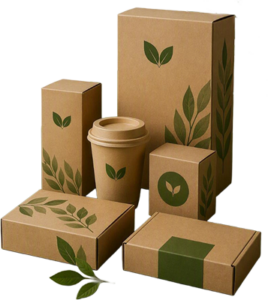 Every product presents unique packaging requirements. Differences in shape, fragility, presentation needs, shelf-life requirements, and consumer expectations mean that no single packaging solution fits every application, and that custom packaging solutions have to start from the product itself.
A key aspect of packaging consultancy is understanding how each design choice affects both the product and the production process. This includes evaluating how the pack protects the product during handling and transport, how it is presented on shelf, how easy it is for consumers to use, and how efficiently it can be formed, filled, closed, and handled on automated packaging lines. In this way, packaging becomes not only a container, but a strategic tool for brand differentiation and industrial performance.
For example, Cama has worked with customers seeking to replace traditional plastic flow-wrap packaging with fiber-based alternatives without compromising brand recognition. In these cases, the challenge extended beyond simply changing materials. The new carton-based solution had to maintain the visual identity, perceived quality, product visibility, and handling experience of the original pack, while also being suitable for automated production. Through tailored carton development, it was possible to reproduce the role and appeal of the existing packaging, reduce reliance on single-use plastic, and create a solution that better supported the customer’s sustainability needs.
Sustainable packaging design and plastic replacement
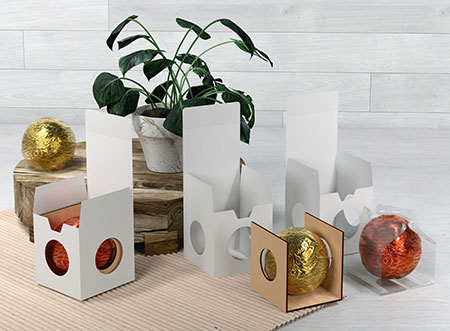
Sustainability in design has become one of the most significant drivers of packaging innovation. However, truly sustainable packaging requires more than replacing plastic with paperboard. The best solutions are those that balance environmental performance with product protection, consumer experience, and production efficiency.
Cama’s experience shows that innovative packaging design can help brands remove unnecessary materials while maintaining the functional characteristics consumers expect. Several projects have focused on replacing plastic trays, inserts, and secondary packaging components with engineered cardboard alternatives designed to hold, protect, separate, or display the product effectively. These solutions often rely on structural details such as folds, cuts, locking systems, and shaped supports that replicate the performance of plastic components while improving recyclability and reducing material complexity.
In addition to reducing single-use plastics, packaging consultancy also supports broader sustainability objectives such as mono-material packaging concepts, improved recyclability, and alignment with circular economy principles. As brands increasingly seek packaging solutions that are easier to recycle and more environmentally responsible, the ability to redesign packaging systems holistically becomes a significant competitive advantage.
Cost-effective packaging through integrated design and automation
Sustainable packaging is often perceived as a cost driver, but when design, materials, and automation are considered together, it can become a concrete opportunity for efficiency. Through packaging consultancy and material optimization, Cama helps customers analyze material usage, blank dimensions, pack geometry, machine performance, changeover needs, and process flow to identify solutions that reduce consumption, minimize waste, and improve line reliability. Optimizing the pack from the early design stages can also support smoother forming and closing operations, reduce rejects, improve transport efficiency, and simplify downstream handling. This integrated approach ensures that the packaging concept is not only attractive and sustainable, but also technically feasible, scalable, and cost-effective in industrial production.
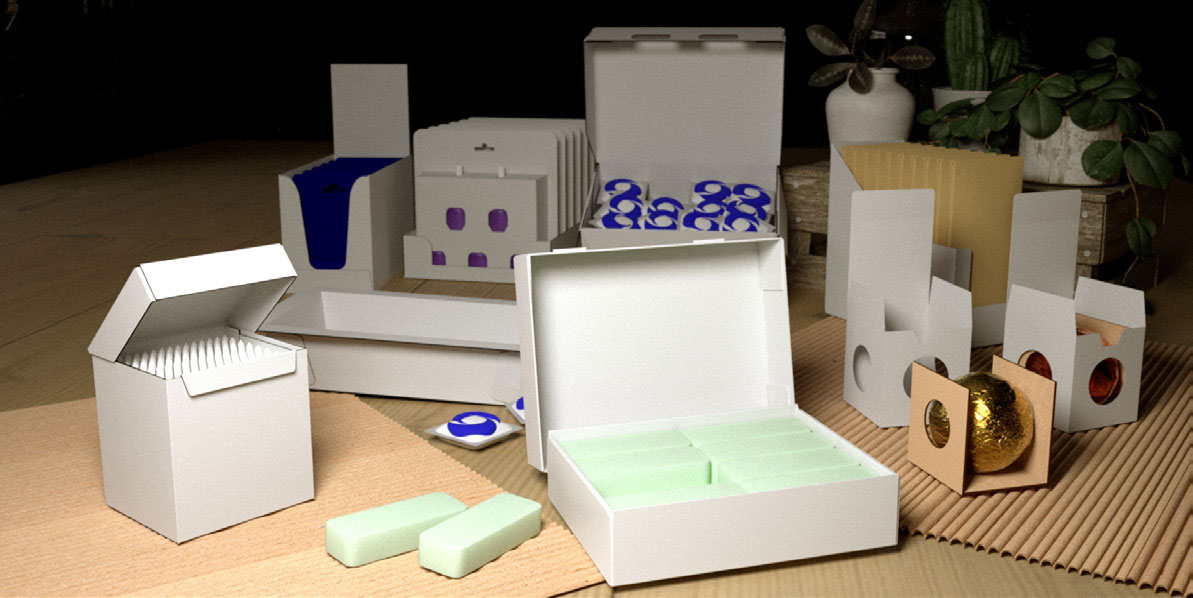
Turning Packaging Challenges into Sustainable, Efficient Solutions
As consumer expectations, sustainability targets, and production requirements continue to evolve, packaging design consultancy is becoming a strategic lever for brands that want to stay competitive. The most effective packaging solutions are no longer designed around a single objective: they need to combine environmental responsibility, operational efficiency, product protection, and strong brand performance.
With a tailor-made approach, Cama helps customers reduce material use, replace unnecessary plastic, improve recyclability, support automation, and increase packaging efficiency. Its dedicated Packaging Department guides customers throughout development, helping define the most suitable solutions for their specific packaging needs.
By considering design, materials, and machinery as part of the same ecosystem, Cama supports the development of solutions that are sustainable in concept, reliable in production, and relevant for the market.
Looking for a packaging solution that is sustainable, efficient, and ready for automation? Contact Cama to explore how our packaging design consultancy can support your next project.
